


In the last Wiki entry I introduced “ema” (Japanese wooden wishing plaques).
Today I want to explain about another thing that you’ll find just as often in many shrines and temples: OMIKUJI
Omikuji = Lottery?
You possibly could explain omikuji (御御籤, 御神籤, or おみくじ) in a very short phrase: fortune-telling paper strip.
And yes, that’s pretty much what it is, but there’s so much more you should know!
Omikuji has the kanji for lottery (籤、くじ – kuji) in it. Literally it means “sacred lot”.

The way you obtain your omikuji really feels like a lottery!
Traditionally you had to shake a small box until a small bamboo stick fell out. The stick had a number on it and according to the number you were given an omikuji by the priest or miko. This is still possible nowadays, but more common are boxes that are located somewhere on the temple / shrine ground. For a small fee (usually one coin) you can draw one of the paper strips yourself.

The different types of omikuji
The strips are usually rolled up or folded and you have to unroll them in order to be able to read them.
The omikuji I got so far had a LOT written on them, but everybody first checks for the “general” fortune statement telling you if you’re super lucky or not. Usually the following types are available (from super good to super … not so good ;P)
- (大吉, dai-kichi): great blessing
- (中吉, chuu-kichi): middle blessing
- (小吉, shou-kichi): small blessing
- (吉, kichi) blessing
- (半吉, han-kichi): half-blessing
- (末吉, sue-kichi): future blessing
- (末小吉, sue-shou-kichi): future small blessing
- (凶, kyou): curse
- (小凶, shou-kyou): small curse
- (半凶, han-kyou): half-curse
- (末凶, sue-kyou): future curse
- (大凶, dai-kyou): great curse
Omikuji are not always easy to interpret
After this general statement the paper strip will also inform you about your chances in finding a new job, love, about your future health, business success and more in greater detail!
Usually the Japanese in the omikuji is very difficult to understand, so either don’t bother at all or ask a Japanese friend to translate it for you.
Here you can see two of my omikuji. The “fortune statement” is marked in yellow. I never got the super-duper lucky one. I guess most Japanese wouldn’t be satisfied with what I got.
Why are they so difficult? Can’t they just write it in super easy Japanese?
I guess they could, but omikuji are traditionally written in poem form. Many are based on the “100 Chinese Poems” written by the Buddhist monk Tendai.
A long time ago the omikuji were used as decision guidance. People wanted to know from the god of a shrine if their plan is going to be successful or not. Thus, the omikuji were born.
During the Muromachi Period even the Shogun was chosen using omikuji!
What are you supposed to do with your omikuji after reading it?
The custom is that you leave the omikuji behind if it’s not a good fortune. Traditionally they’re tied around the branches of a pine tree.

This goes back to a pun with the word for “pine” (松, matsu) and the word for “wait” (待つ, matsu). The idea behind this is that the bad luck will wait by the tree instead of sticking with the person who drew the sacred lot!
Nowadays, they’re not only tied to pine trees anymore, but to all sorts of things. One reason is that not all shrines or temples have a pine tree in the first place.

I heard that people also leave good fortune strips behind, but usually you’re supposed to keep it close to you, e.g. in your purse.
From the Edo Period onwards the tying to the tree was associated with “縁を結ぶ, en wo musubu” which means “connecting with s.b.” – in this case with the god of the shrine / temple. In Japanese the word “musubu” is used for “to connect” as well as for “to tie“. That’s why some people tie their good fortune strips instead of taking it home.
However, the rules for it are not very strict. For many people it doesn’t have a religious background, but is more “for fun”.
Japanese people LOVE fortune-telling (as well as good luck charms).
Whenever you visit a temple or shrine you’ll see hundreds if not thousands of those paper strips!

Though this is just my personal opinion, but I have the feeling that many people do it really just for fun to see if they can get the “super-duper luck” with their first draw or not. It’s more like a lottery than a serious matter.
Personally I ike that kind of attitude. It is part of their religion, but it’s not very strictly handled at all.
Note: In some bigger shrines / temples they also have English omikuji, but they are still not very common!


When do most Japanese people grab those omikuji?
Well, like mentioned above for many it’s just like lottery, so sometimes they just do it randomly when they visit a shrine or a temple.
Others go there before a big event in their life: exam, match, business opening etc.
Also, almost EVERYBODY gets their share of omikuji during “Hatsumode” in the beginning of January. I say “share”, because some people tend to draw as many as necessary to get the “You is super lucky, man!” one! *g*

Omikuji shouldn’t be confused with ema. While both of them are often put together or right next to each other, they are two completely different things.
Yet omikuji and ema are – together with the lucky charms – the three most “important” shrine / temple items that anybody can easily get / use! A little bit more exotic, but my favorite are seals!
Thanks for reading. .gif)
I hope this post was useful or at least interesting.
Feel free to share your omikuji knowledge or experience with us! .gif)


Awesome post! Such a wealth of info :hihi:
I’ve only purchased an omikuji once. I still have it, but I only have a vague idea of what it says lol Perhaps one day~ :ehehe:
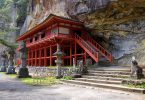
great pictures too! :sparkling:
do you collect omikuji when you visit shrines or temples?
No, I’ve only purchased them a few times. I don’t believe in fortune-telling.
Among all the things you can purchase or do at a temple / shrine this is the one that interests me the least!
I do collect seals, ema and lucky charms, though! :shiawase:
I was always quite lucky with my omikuji :satisfied:
The big temple in Asakusa has English omijuki and still has the traditional sticks in a wooden box.
Are you usually lucky with lottery, too?
I’m not very lucky with either of them! :disappointed:
You mean the Sensoji Temple? I’m not surprised. I’m quite sure that this is the temple that gets the most foreign tourists in whole Japan.
I remember that I saw English omikuji a few years ago. All I can recall is that it wasn’t in Tokyo or Kyoto … if I ever figure it out, I’ll update this blog post. *g*
Have you ever used one of those wooden boxes to obtain an omikuji?
That’s maybe one of the things I still want to try! :thumbup:
I’m pretty sure the Fushimi Inari Shrine in Kyoto also had English ones. Yup, I did, it’s fun with those boxes. Sadly my luck with omikuji does not translate to luck with the money kind of lottery.
Thanks for a nice clear explanation of all those twisted papers! I am afraid I have never bothered with the omijuki. I do think I might try the ema someday, mainly because I like them. To me they would be something to do for fun, as I just don’t believe in any of this stuff.
I think there is a reason behind the difficulty of the language: that way, it is more mysterious and open to interpretation, like oracles.
Your explanation reminded me of Akechi Mitsuhide before he attacks Nobunaga [in Toshiie and Matsu] shaking those bamboo sticks out of a box, and getting 凶, then 末凶, then 大凶, and he keeps shaking until he gets a favorable one…
I don’t believe in fortune-telling. That’s why I usually don’t bother with the omikuji.
I do collect ema if they are beautiful or interesting. I collect lucky charms and of course seals. For me this is meant to be as a memory / souvenir of places I visited. I don’t do it because I believe in it.
I think a lot of Japanese people do it that way! :hihi:
It’s like cheating, but on the other hand it can be seen as “working hard to obtain good fortune” / “it’s in your hands if you will be lucky or not”.
Great post and very informative. You have done a great job about explaining Omikuji and I can’t add much more. We don’t get them so often but usually do around the New Year and hope for the best for the new coming year :)
Nice article! I myself have bought English written omikuji in Kasuga shrine in Nara – you can choose to get English or Japanese. Also in Todaiji, again in Nara, the omikuji is written in both languages.
There are quite a few spots where you can get English omikuji.
I actually got a double-sided one (one side in Japanese, the other in English) in Naha, Okinawa Prefecture. Not surprising with all the US Navy bases there, though!
[…] At the End of Nakamise Dori, i got to try Omikuji for a donation of Y100. Its a Japanese fortune telling where i should shake a metal hexagon box until a bamboo stick come out from a little hole. At the edge of the stick, there is a Japanese letter (number) that i should match to one of the many small drawers. Inside the drawer was my fortune paper awaited me, may it be super bad, bad, okay, common luck, great luck, or super luck. If you got a bad a one, you have to tied it into a pine trees branch so the bad luck doesn’t follow you home. But i pulled out a ‘great luck’ one so i brought it home :). read more about Omikuji here […]
[…] thousands, of people queued to throw coins and pray in front of the shrine, continued by taking an omikuji to find out how their fortune for the next year, The omikuji paper was then hung in a tree to avoid […]
[…] For information on how to do the Omikuji process (how to get your fortune told), click here. For more information about what an Omikuji is, click here. […]
[…] I believe this activity below is called “Omikuji”? I participated in this at the Fushimi Inari Shrine. I read a bit more about it here: http://zoomingjapan.com/wiki/omikuji-fortune-telling-paper-strips/ […]
Thank you for the information! I was wondering if you know what the chances are of drawing a “super great luck” omikuji? I did when I went to Hatsumode today and I was wondering whats the probability involved? Like out of 100, how many are super lucky fortunes? How many are super unlucky fortunes?
Haha, what an interesting question.
I don’t know if some professors at a Japanese university ever worked on this or not, but I’m quite sure there are no statistics about that.
Also, this varies greatly from temple to temple / shrine to shrine. It’s impossible to predict how likely it is for someone to draw “super lucky fortunes”. ;)
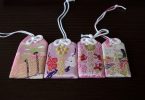
Thanks for sharing! I love the photo of the pink omikuji! Is that just the lighting or were they really tinted pink? Do you know if there was a special significance?
I happened to have linked this post to the one I just made, also about omikuji ;)
https://bustrainboatwalk.wordpress.com/2016/04/19/omikuji/
They were really pink. :)
I don’t know for those, but pink is often associated with “love” or finding “love”. For many lucky charms and the likes there are colors and each color means something else.
Pink / red = love, green = health etc. :)
[…] made our way to the omikuji station to find out what our fortunes would be for the upcoming year. To do this, we had to shake a […]
[…] you like to try omikuji, sacred […]